


What MINI OEM parts means on this site
Someone searching for MINI Cooper parts usually holds a failed part, or an old invoice with a string of digits on it. This site keeps fifteen MINI chassis pages, from /fitment/R50 through /fitment/F60. Reading the part lists on those pages in full and deduplicating by part gives eighty-three unique parts. That figure is not an estimate: each page states its own count — the R50 page says "18 part numbers matched by OE number", the R60 page says 23 — and the fifteen pages agree, one by one, with the sweep of 2026-11-22. The numbers in this article come from that sweep, and chassis codes the site does not stock are left out.
On the naming side, MINI parts on this site follow a fixed formula: {part type} for MINI ({chassis codes}), as in Lower Suspension Arm for MINI (R50 / R52 / R53). What the three words OEM, OE and aftermarket each mean is a chapter of its own in the terms guide; the ordering-relevant conclusion is this: the brand word and the part-type word in a listing name are catalogue wording, not the fitment evidence. What counts is the OE number plus the chassis code. Listing names get abbreviated and switch between British and American usage — a control arm also answers to Track Rod — while the number does not change. The chapters below follow that thread: how to read the number, how far one number reaches, which parts MINI shares with BMW, and finally the ordering run-through.
One overview figure first: the fifteen chassis pages hold 216 part-to-chassis records in total, deduplicating to eighty-three unique parts — an average of 2.6 chassis pages per part. In other words, the norm for MINI parts on this site is not one code, one part, but one number across several codes. That ratio shapes the ordering method: recognise the number first and let the chassis row confirm it; reverse the order and it becomes easy to buy the neighbouring variant within the same generation. The chapter on one-number-several-chassis takes this apart.
A MINI part number is a BMW part number
Open any MINI part page on this site and the OE line shows the same format: eleven digits, no letter prefix. The conventional writing groups them 2-2-1-3-3 — the R50 lower arm's 31126761409 reads as 31 12 6 761 409. This numbering is not a MINI dialect; it is the BMW system itself. The site's number-reading guide carries the full group table: the first two digits name the system group — 11 engine, 12 engine electrical, 13 fuel and intake, 24 transmission, 31 front axle, 33 rear axle, 61 body electrical, 64 heating and air conditioning. The next pair narrows to a sub-assembly, and the remaining digits identify the specific item and its revision. Dozens of main groups exist beyond the eight listed; these are the common ones.
Check the real MINI numbers on this site against that table and each one lands where it should: the three starting with 31 — lower arm 31126761409, shock absorber 31316763132, wheel hub bearing 31226756889 — sit in the 31 front-axle group, matching their part types; the rear suspension kit 33326769020 sits in the 33 rear-axle group; the oil pan 11137550483 sits in the 11 engine group. The number states which system it belongs to — the most practical feature of the eleven-digit format. Given an unfamiliar number, the first two digits give the part family before the listing name is even read, and the remaining digits narrow it to the item. The reverse also works as a sanity check: when a number's first two digits contradict the part type — a listing called a shock absorber carrying an 11-prefix — the number itself deserves a second look.
31126761409 has a neighbour, 31126761410 — the R50/R52/R53 lower-arm page and the control-arm page carry these two numbers, adjacent within the family and one digit apart at the end. Adjacent numbers of this kind usually mean left and right of one assembly position, or closely related variants; both pages show "Lower" in the Fitting position line. Judging adjacent numbers works best with number, part type and position line side by side: one listing named Lower Suspension Arm and one named Control Arm, both marked lower, numbers one digit apart — most likely the same left-right pair under two catalogue names. To settle it, one cross-reference query returns the primary number.
The precedent for arranging BMW number families by chassis already exists on this site: the alternator numbers guide tabulates alternator numbers across BMW generations, and the MINI side reads by the same rules and the same group table — the difference is that the chassis codes run R-series and F-series instead of W-series and F-series. Where the codes themselves come from, and how the generations map, is laid out in the chassis-codes guide; this article draws only on the fifteen codes that are online here.
One number, several chassis
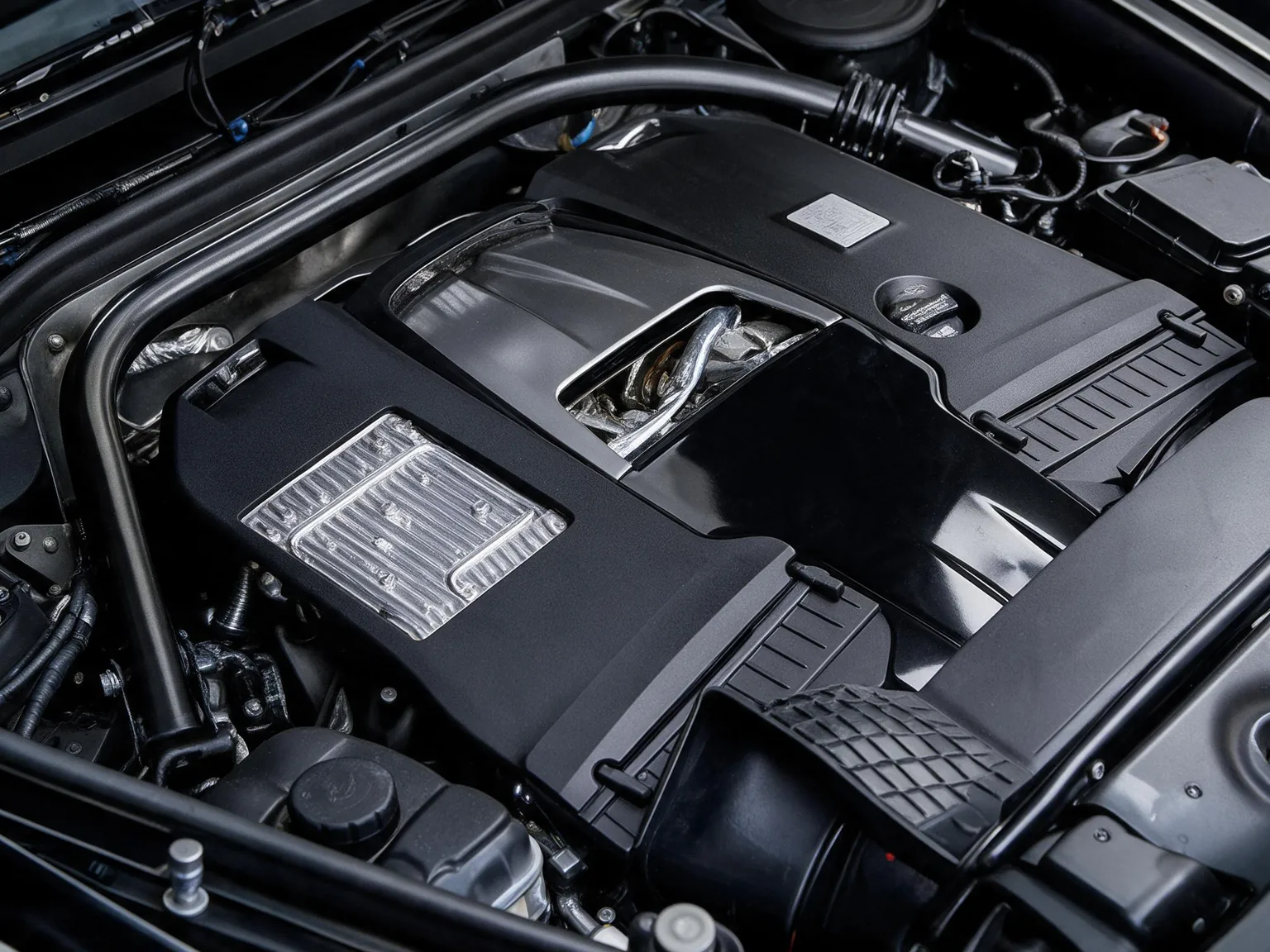
One R-series oil pan makes the point: 11137550483, whose chassis row lists ten codes — R50, R52, R53, R55, R56, R57, R58, R59, R60, R61 — the whole R series as it stands on this site. One number across ten model generations is not a cataloguing slip; it is what platform carryover produces. A part carried over onto successor models keeps its number, and the fitment range widens with it. Parts bound tightly to the engine layout, oil pans among them, barely move within a platform generation. The site's handling is plain: the chassis row reproduces the part page's original data, listing as many codes as the row carries, without trimming.
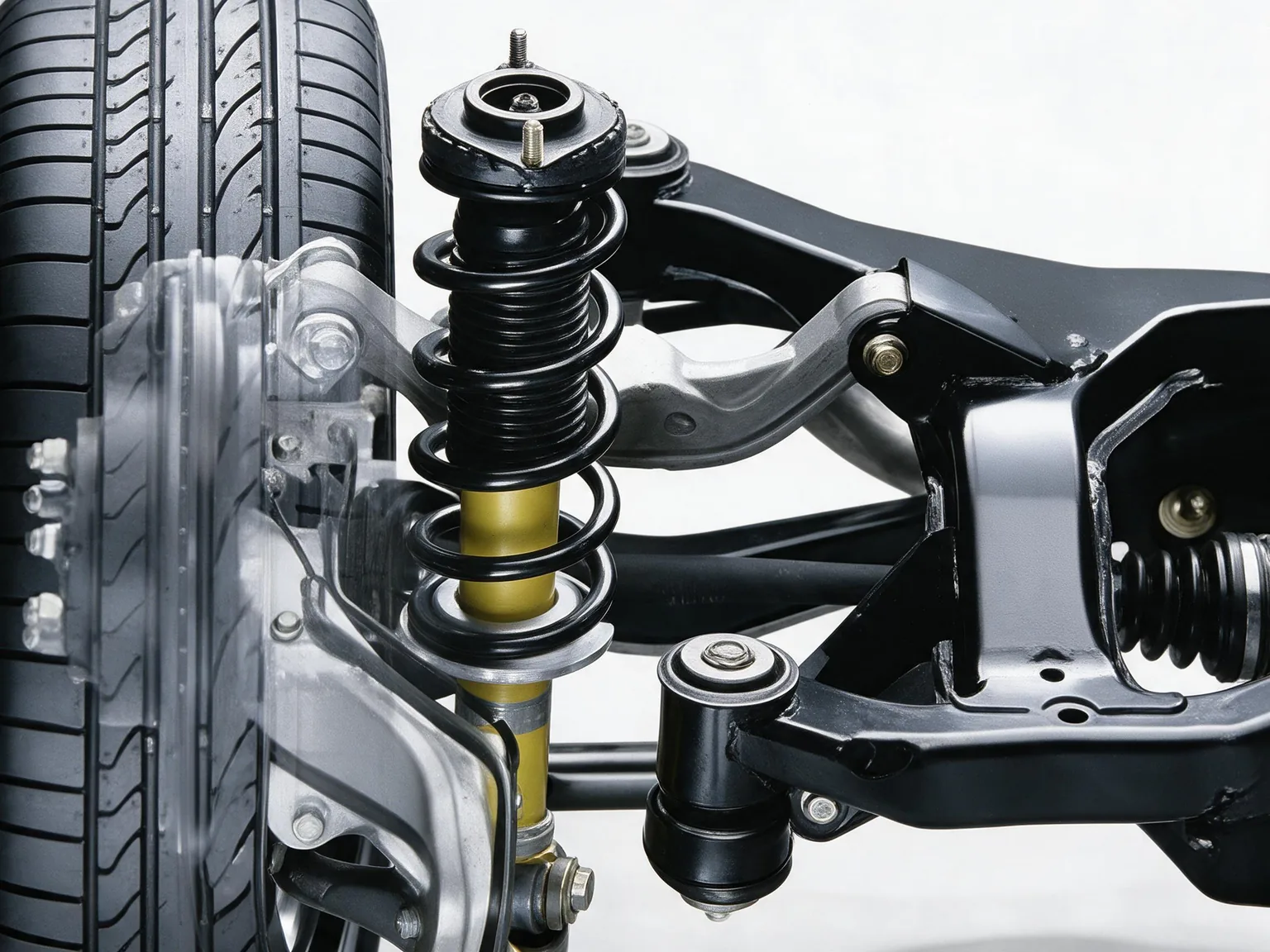
The control-arm family runs the same way, a step narrower. control-arm-r50 spans five chassis codes — R50/R52/R53/R55/R56 — covering the first-generation Hatch and Convertible together with the early second generation; the R55 control arm 31126772301 spans R55/R56/R57/R58, serving Clubman, Hatch, Convertible and Coupé alike. The full chassis-by-chassis mapping of control arms sits in the control arm pillar page; its R55 row carries the very part named here. Cross-chassis parts are the economical ones to order by: one recognised number covers several generations back and forth.
For the buyer the implication is direct: holding only a chassis code or a VIN, land first on a stock page such as R53, R55 or R58, copy the candidate part numbers, then take the numbers to the cross-reference — a far higher hit rate than guessing at listing names. A chassis page is a stock list arranged by code: counts, part types and numbers in one view. Listing names are for people to read; numbers are what the system reconciles, and the two paths are not in the same class of accuracy.
Kit numbers add one more layer to unpack. The suspension kit 33326769020 lists three sub-numbers on its part page — 31106770685, 31106770686, 31106861151 — one for each component inside the kit. When checking a kit, unpack the sub-numbers and check them individually, because a kit's fitment follows its components, not the kit name: one component that does not cover your chassis invalidates the whole kit. That is also why kits are better ordered number by number — the kit name is one label, but the sub-numbers may each walk their own chassis rows.
Where MINI and BMW share the bin
The easiest batch to overlook in the sweep: fourteen unique parts sitting on MINI chassis pages whose listing names read "for BMW". By part type: Oil Filler Cap for BMW, four; Control Arm for BMW, three; Suspension Kit for BMW, two; and one each of Wheel Hub Bearing, Wheel Hub, Actuator, Strut Assembly and Oil Filter Housing for BMW. The name says BMW; the shelf position says MINI — the two lines of information only read whole together.
Two examples show what this batch is. wheel-hub-bearing-r53 is named "Wheel Hub Bearing for BMW", yet its chassis row reads R53/R55/R56/R57/R58/R59 — six MINI chassis codes, from the Cooper S through to the Roadster. control-arm-e90 reaches wider: E90, F49, F52, F45, F54 — a BMW 3 Series code on one side, a MINI Clubman code on the other, one control arm number. This generation of MINI shares chassis parts with BMW's front-wheel-drive platforms: the parts are common-sourced, the numbering is one system, and the brand word in the name is the original catalogue wording, not the fitment boundary.
The practical meaning: do not rule a part out for MINI because its name says "for BMW", and do not rule out a BMW car from a MINI-named part either. The anchor is the number and the chassis row: if the part page lists your chassis code, run the process on the number; if it does not, try another number. These shared parts concentrate on the five pages F54, F55, F56, F57 and F60 — generations that share platforms with BMW front-drive chassis in the first place, where shared parts are the rule rather than the exception.
Why the name and the shelf cross over this way is explained by how the site records parts: the name follows the original catalogue wording — if the original listing says for BMW, it is recorded as for BMW — while the page placement follows the chassis row, so a part appears on whichever chassis page its row names. Two rules, each governing one end; the crossover follows naturally. wheel-hub-bearing-r53 carries no MINI wording in its name, yet it sits on six MINI pages from R53 to R59; the four Oil Filler Cap for BMW variants sit scattered across the R57, R60, R61 and F55 pages. For a buyer this is good news: parts of both brands are visible within one page system, and a number-based search needs no brand chosen in advance.
The chassis map: fifteen codes, what is stocked
The fifteen online chassis pages, with the site's own model naming and the deduplicated part counts, in full below. Counts come from reading each page's ItemList end to end and deduplicating by part; they agree, page by page, with the self-reported "N part numbers matched by OE number". Model names are reproduced from the site's pages without rewording.
| Chassis code | Site model name | Parts in stock (deduped) |
|---|---|---|
| R50 | MINI Cooper | 18 |
| R52 | MINI Cooper Convertible | 9 |
| R53 | MINI Cooper S | 16 |
| R55 | MINI Clubman | 17 |
| R56 | MINI Cooper | 18 |
| R57 | MINI Cooper Convertible | 15 |
| R58 | MINI Coupe | 10 |
| R59 | MINI Roadster | 8 |
| R60 | MINI Countryman | 23 |
| R61 | MINI Paceman | 17 |
| F54 | MINI Clubman | 12 |
| F55 | MINI Cooper 5-door | 13 |
| F56 | MINI Cooper | 18 |
| F57 | MINI Cooper Convertible | 8 |
| F60 | MINI Countryman | 14 |
The make-up of the eighty-three unique parts: shock absorbers are the largest family, twenty-seven variants — front and rear positions, left and right sides, different spring ratings each holding a number, the densest numbering on the MINI pages. Control arms and rods count sixteen: seven Control Arm, three Control Arm for BMW, one lower suspension arm, four Tie Rod and one Track Rod — Tie Rod and Track Rod being two names for the same kind of part. Hub bearings count ten, suspension kits five, strut mounts four. The rest are oil-path, cooling, electrical and air-conditioning parts — oil pan, oil filter housing, oil filler cap, cylinder head cover, water pump, evaporator, blower motor, power steering — at one to four parts each, with the single power-steering part on R50 and R52. To browse one part type directly, the control arms category page is the ready entrance.
Depth varies and is worth knowing in advance: R60 Countryman is the deepest at twenty-three parts; R59 Roadster and the F57 Convertible are the shallowest at eight each. Coupés and convertibles are niche bodies, and thin catalogues are the market's norm there, not an out-of-stock signal. Two boundary notes, recorded as they stand: F61 has no chassis page — the site returns nothing for that code, and this article does not cover it; and one of the fourteen shared parts (the Strut Assembly) carries "chassis to be confirmed" in its name — the original wording, reproduced as supplied, with fitment decided by number and chassis row.
One note on reading the table: the count is "parts deduplicated within that chassis page", not "parts fitting only that chassis". A control arm spanning five chassis codes is counted once on each of five pages, so the fifteen rows sum to 216 against the eighty-three unique parts. Read the other way, a thin page reaches more parts than its row shows — the R59 page lists eight, yet parts shared with R55 through R58 of the same generation apply by chassis row. Treat the table as entrance depth, not as a fitment ceiling.
How the largest family distributes shows what makes pages deep or thin: the twenty-seven shock absorber variants hold 43 part-to-chassis records across the fifteen pages — R50, R53 and R60 carry seven each, F56 five, R55, R56, R61 and F60 three each, R57 and F54 two each, F55 one; R58, R59 and F57 carry none. Front and rear positions, left and right sides and differing spring ratings each take a number, so shocks multiply into variants naturally. On the pages where no shock is listed, the way in is the neighbouring codes of the same generation — R59's catalogue overlaps heavily with R55 through R58 — which is the second finding path alongside the shared-parts chapter above.
The R-series and F-series boundary, while we are here: the R codes cover the first two generations (the R50-to-R61 span runs roughly 2001 to 2013), the F codes the third generation after them (F54 to F60). Model names recur across generations — the Clubman exists as both R55 and F54, the Countryman as both R60 and F60, likewise the Hatch and the Convertible. This is exactly why ordering by model name is discouraged: "MINI Clubman control arm" can match two generations and two different parts, while the chassis code dissolves the ambiguity in one step.
Ordering by number: the run-through
Step one, get the number. The old part itself, an old invoice, a repair order — anywhere those eleven digits appear. When the cast number on the housing is worn, a photograph enlarged for comparison often recovers it in full. With only a VIN, fold the VIN into a chassis code first, then land on a page such as R56, R60 or F56 — the page is a stock list arranged by code, the candidate numbers are on it, and copying them takes you to the next step.
Step two, run the number through the cross-reference. Enter the OE number and read the primary number and part name it returns; parts carrying several numbers — the trio of shock numbers above — resolve here to one primary number. A miss is not the end: retry with the adjacent number, unpack kits into sub-numbers, and for parts that cross R-series and F-series generations, try the other generation's number. The number guide's chapter "When the lookup says no match" lists the common recoveries and is worth following in order. Thin-catalogue cars — R59, F57 and their eight-part pages — need this step most: a part type absent from the own page is often present under a shared number on a neighbour's, and a ten-chassis number like the oil pan is the direct fallback.
Step three, cross-check on site search. On the part page the primary number returns, check three places: whether the OE line, sku and mpn align on one number; whether the chassis row includes your code — on shared parts this row lists BMW codes alongside MINI codes, which is normal; and whether the Fitting position line matches the position on the car. Treat the listing name as reference and reconcile on these three lines. When any one of the three disagrees, stop and re-check the number before entering an enquiry.
Step four, request a quote. Sending the verified number together with the chassis code draws a faster reply than a part name alone — nobody has to work out first which generation the car is, and there is no round of counter-questions. For shared parts (a for BMW name, a chassis row with MINI codes), send the number as it is, no extra explanation needed; where the position line reads Left / Right for a paired part, include the position as well and skip a second confirmation round.
Collected into one checklist: number right — OE, sku and mpn on one number; code right — the chassis row includes your chassis code; position right — the Fitting position line matches the car. With the three aligned, the ordering error on MINI parts is down to the number itself. That is the whole argument of the number guide as well: read the digits correctly, and what remains is procedure — a procedure this page has now given in full.
Common questions
- Are MINI part numbers the same as BMW part numbers?
- Yes. The OE numbers on this site's MINI part pages each carry the BMW eleven-digit format, without letter prefixes — the same 2-2-1-3-3 grouped reading and the same group table as BMW parts. MINI parts and BMW parts are not separated within this system: lookups, reconciliation and ordering run one process, and cross-brand shared parts (a for BMW name with MINI codes in the chassis row) are handled by number in the same way.
- Which MINI chassis does this site stock parts for?
- Fifteen chassis pages are online: R50, R52, R53, R55, R56, R57, R58, R59, R60, R61, F54, F55, F56, F57 and F60. Deduplicated, they hold eighty-three unique parts; R60 Countryman is the deepest at twenty-three, R59 Roadster and the F57 Convertible the shallowest at eight each. F61 has no chassis page — the site returns nothing for that code, and chassis codes not stocked are not covered here.
- What does it mean when a MINI part number starts with 31 or 33?
- The first two digits are the system group: 31, front axle — shock absorbers, control arms, wheel hub bearings; 33, rear axle — rear suspension arms and subframe components. The site's real MINI numbers each land where the table says: 31316763132 (shock absorber) in group 31, 31226756889 (wheel hub bearing) in group 31, 33326769020 (rear suspension kit) in group 33. Given an unfamiliar number, the first two digits give the part family, then the sub-assembly narrows it further.
- Why does one shock absorber list three OE numbers?
- Historical and variant numbers coexist on one fitment position: the R50/R53 shock absorber page records its OE line as 31316763132, also 31316786006 and 31316780468. The site records these with the OE, sku and mpn fields aligned; the cross-reference returns the primary number, and ordering runs on the primary. The three numbers do not affect the part's fitment — the chassis row remains R50/R53.
- Can I search a BMW part number and get MINI parts?
- Yes — on the shared-platform generations this is routine. Fourteen BMW-named parts sit on this site's MINI chassis pages: control-arm-e90 spans E90 and F54 in one part; wheel-hub-bearing-r53 spans six MINI chassis codes from R53 to R59. After finding a part by its BMW number, check whether the chassis row includes your MINI code; the reverse direction works the same way, judged by the chassis row.
Got a part number or a VIN? Get availability and price — we reply within four business hours with price and lead time attached.